What Is Trauma-Informed Care?
Search Post
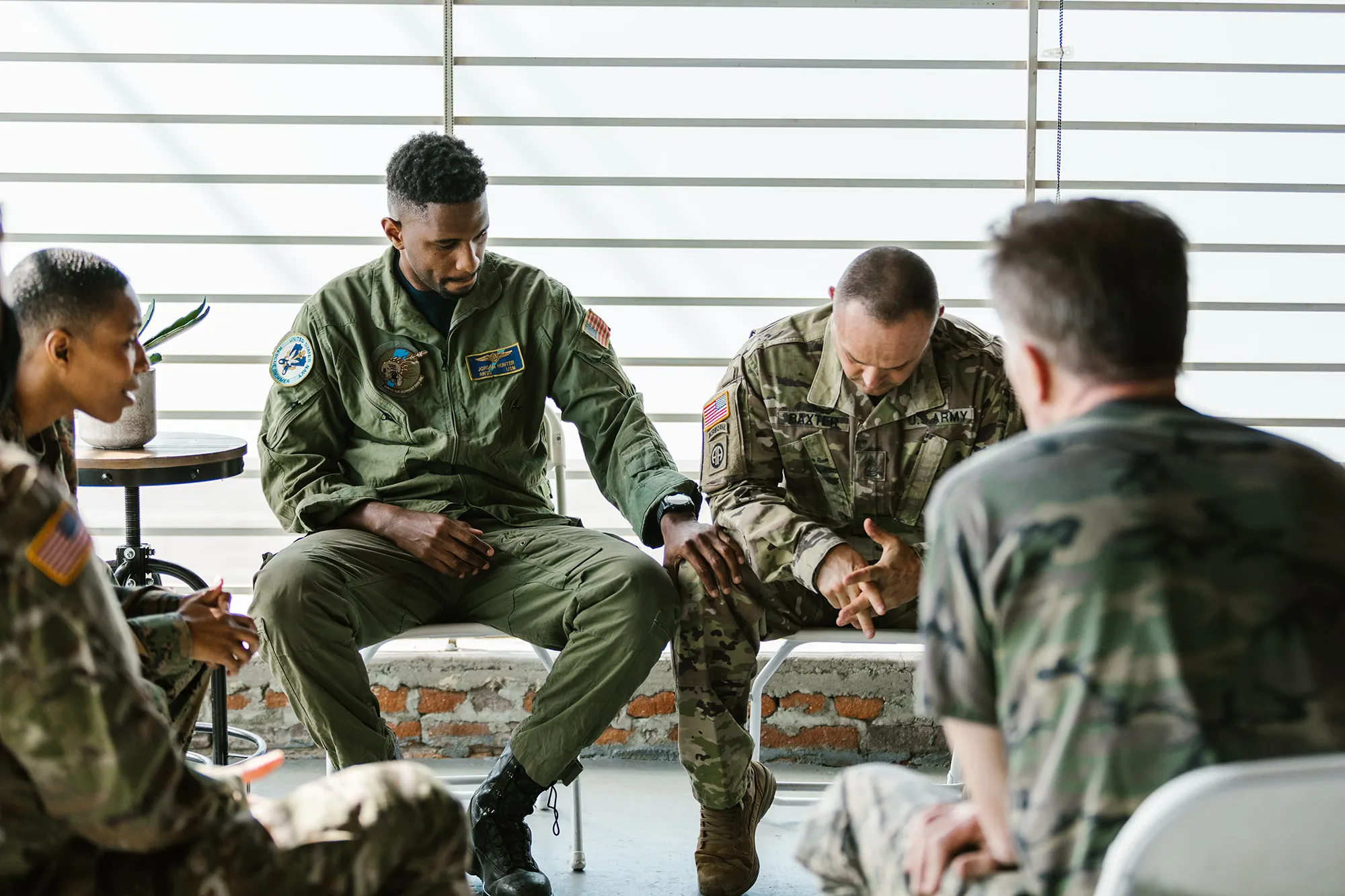
Most people who’ve served in the military or worked in emergency response have heard some version of this advice: “You should talk to someone.” And most have had the same gut reaction. Something between resistance and frustration. Not because the advice is wrong, but because of what it implies.
Trauma-informed care starts from a different place entirely. Instead of asking “what’s wrong with you,” it asks “what happened to you.” That distinction matters more than it might seem at first glance. It’s the difference between a framework that treats you like a problem to fix and one that treats you like a person who adapted to survive hard things.
If you’re a Veteran, a firefighter, a paramedic, a law enforcement officer, or a family member trying to understand what someone you love is going through, this guide is for you. No clinical jargon. No hand-wringing. Just a clear explanation of what trauma-informed care actually is, what it isn’t, and where to find it in Douglas County.
What Trauma-Informed Care Actually Means
Trauma-informed care is a practical approach used by counselors, wellness providers, and community organizations. At its core, it operates on a few straightforward principles.
First, it recognizes that trauma is common, especially in high-stress professions. It doesn’t treat your experience as unusual or broken. It acknowledges that repeated exposure to danger, loss, moral injury, or operational stress leaves a mark. That mark is not a character flaw.
Second, it prioritizes safety and trust. Before asking you to open up, a trauma-informed provider works to establish an environment where you actually feel secure enough to do so. That means respecting your pace, your boundaries, and your autonomy. You stay in the driver’s seat.
Third, it looks at the whole person. Not just symptoms, but the full picture of your life: your relationships, your physical health, your sense of purpose, your connection to community. At JLC Wellness Collective, this is structured around the 8 Dimensions of Wellness (mental, physical,
social, occupational, environmental, emotional, intellectual, and spiritual), which means support doesn’t stop at one conversation in one room.
What Trauma-Informed Care Is Not
There are enough misconceptions about this approach that it’s worth being direct about what it doesn’t involve.
It is not lying on a couch while someone asks about your childhood. It is not a diagnosis. It is not an assumption that you have PTSD or any other condition. Plenty of Veterans and first responders carry the weight of operational stress, transition challenges, or moral injury 1 without
meeting criteria for a clinical diagnosis. Trauma-informed care is relevant to all of them.
It is not a requirement to relive your worst moments. Trauma-informed providers understand that forcing someone to revisit painful experiences before they’re ready can do more harm than good. And it is not a sign of weakness. This is probably the most persistent misconception, particularly in military and first responder culture.
Seeking support through a trauma-informed framework requires the same kind of discipline and self-awareness that made you effective in service. The skills that kept you operational (situational awareness, threat assessment, suppressing emotional response in the moment) were necessary then. Trauma-informed care helps you recalibrate those skills for the life you’re living now.
Why This Matters for Veterans and First Responders Specifically
The military and first responder communities share a culture built on toughness, self-reliance, and mission focus. Those values have real merit.
They also create a specific barrier to seeking support: the belief that needing help means you’ve failed.
Trauma-informed care was developed, in part, because traditional mental health approaches weren’t reaching people like you. Standard intake processes, clinical language, waiting rooms that feel nothing like the environments you’re used to operating in. These things create friction. Trauma-informed providers understand that friction and design around it.
There are also factors unique to service-connected stress. Transition out of the military involves losing a structured identity, a built-in community, and a clear sense of purpose, sometimes all at once. First responders face cumulative exposure to other people’s worst days, often without adequate time to process between calls. These experiences don’t always produce dramatic symptoms. Sometimes they show up as irritability, withdrawal, difficulty sleeping, a sense of disconnection, or a feeling that civilian life doesn’t quite fit.
A trauma-informed approach doesn’t pathologize any of that. It names it plainly and offers concrete tools.
What This Looks Like in Practice at JLC
JLC Wellness Collective runs a program for “Those Who Serve” that is built specifically to address the types of trauma and support needs that Veterans and first responders along the Colorado Front Range carry. It’s not a single service. It works as a network, connecting the people it serves to a range of supports — from talk therapy to body-based and restorative practices — chosen to meet the whole person rather than a single symptom.
That structure is intentional. Different forms of support address different dimensions of wellness: the cognitive and emotional, what the body holds, and the time and space to step back and reconnect. Jennifer Canning, JLC’s founder and a licensed professional counselor with over 20 years of practice in Castle Rock, designed the program to address wellness across multiple dimensions, not just the mental or emotional ones.
The program also recognizes that purpose, meaning, and values alignment (what JLC calls the spiritual dimension of wellness) are central to recovery. Losing a sense of mission after leaving service, or feeling disconnected from the values that drew you to the work in the first place, is one of the most underaddressed factors in Veteran and first responder wellness.
Everything in the program is voluntary. You set the pace. No one is going to push you further or faster than you’re ready to go.
What Families Can Do
If you’re a spouse, a parent, or an adult child of a Veteran or first responder, you’ve probably felt the effects of their stress even if they haven’t named it directly. You may have noticed changes in mood, withdrawal from activities they used to enjoy, shorter patience, or a general sense that something shifted and never quite shifted back.
Here are a few concrete things you can do.
Learn about trauma-informed care yourself. Understanding what it is (and what it isn’t) helps you avoid common missteps, like pushing someone to “just talk about it” before they’re ready or interpreting their withdrawal as personal rejection.
Avoid ultimatums. “You need to get help or else” rarely works with this population. Instead, make information available without pressure.
Mention a program. Leave a link where they can find it. Let them come to it on their own terms.
Take care of yourself. Supporting someone through stress and recovery takes a toll. You are allowed to seek your own support. JLC’s programming is open to family members, not just the service member or first responder.
Ask one simple question: “What would help right now?” Sometimes the answer is space. Sometimes it’s company. Sometimes it’s someone to handle the logistics of finding a provider. Meeting them where they are is the most trauma-informed thing you can do.
Your First Step Is Free
If anything in this guide resonated, whether for yourself or someone in your life, JLC Wellness Collective offers a free initial conversation. No paperwork. No commitment. Just a chance to ask questions and find out whether the program is a fit.
JLC is located at 823 S Perry St, Suite 280, Castle Rock, CO and serves Veterans, first responders, and their families across Douglas County and the Front Range.
Contact JLC Wellness Collective to schedule your free conversation. That’s it. One step. On your terms.
Tags :
Share :
Leave a Reply
You must be logged in to post a comment.